New Noises From The System
A furnace develops a familiar sound pattern over the years, and changes to that pattern are worth attention. Rattling can point to a loose panel or blower component. Scraping suggests metal contact that will only get worse. A high whine under load can mean a motor bearing is wearing out, while a low boom at start up can mean delayed ignition that needs prompt service.
The key detail is when the noise happens. A sound at start up points toward ignition or the inducer. A sound that grows as the blower speeds up points toward the blower assembly or ductwork. A sound at shutdown can be cooling metal or a damper. Manassas homeowners who note the timing, the pitch, and whether the noise is new this season give a technician a head start. Waiting until a worn bearing seizes turns a planned repair into a no heat emergency. A phone recording of the sound, made safely from outside the cabinet, can help more than an imitation on the service call, especially when the noise only appears during the first cycle of the morning.
Short Cycling And Uneven Rooms
Short cycling means the furnace starts, runs briefly, shuts off, and starts again far more often than it should. Each restart is hard on ignition parts and motors, and the house never settles at an even temperature. Causes range from a clogged filter and overheating to a faulty flame sensor, a misplaced thermostat, or a furnace that is oversized for the home.
Uneven rooms tell a related story. When one floor in a Manassas colonial feels warm and another stays stubbornly cool, the furnace may be shutting down before it can push enough heated air through longer duct runs, or the blower may be losing strength. Rule out closed vents and blocked returns first. If the pattern persists with a clean filter and open vents, the system is asking for a diagnosis, not another degree on the thermostat. Track the pattern for a day if the house stays safe and reasonably warm, counting starts in an hour and noting cycle length, because that simple log can separate a thermostat problem from an overheating problem before anyone opens the cabinet.
Rising Runtime And Yellow Flames
A furnace that runs longer each winter to hold the same temperature is quietly reporting a loss of performance. Dirty burners, a coating of dust on the blower wheel, weak airflow, and worn components all force longer cycles. Many homeowners notice it first on the utility bill or in the feeling that the system simply never rests on cold Northern Virginia days.
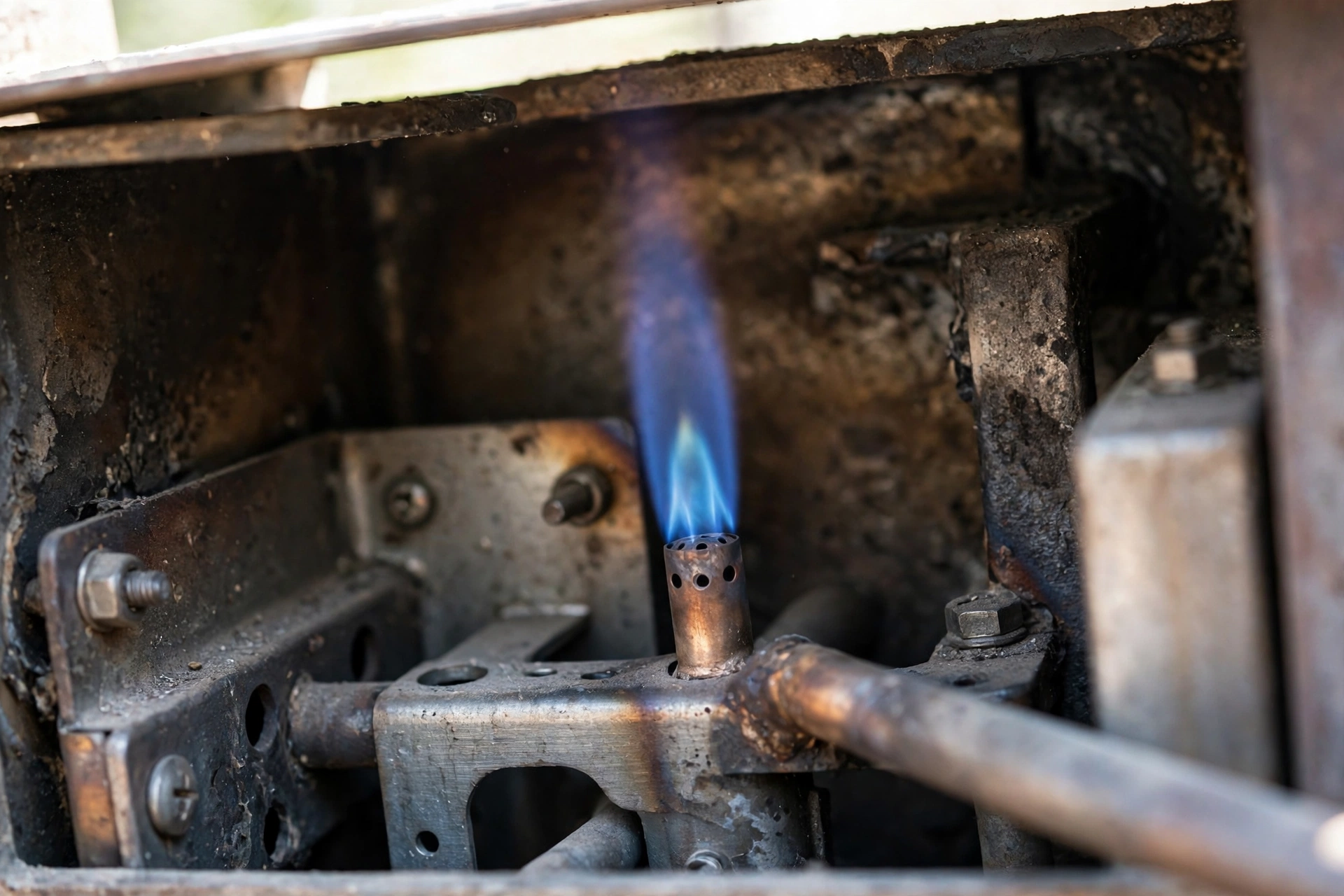
The burner flame offers a visible check. A healthy gas flame is steady and mostly blue with small yellow tips. A flame that is mostly yellow, lazy, or flickering can mean the burners need cleaning or the combustion is not right, and that deserves prompt attention because poor combustion is tied to carbon monoxide risk. Never ignore a changing flame. Note it, leave adjustments to a technician, and treat it as a repair sign rather than a curiosity. Compare this winter with last at similar temperatures rather than with a mild month, since longer cycles during a genuine cold snap are normal, while longer cycles in the same weather as last year point to a system quietly losing ground.
Dust, Odors, And Air Quality Clues
A sudden increase in dust around the registers, a gritty film returning days after cleaning, or stale air that never quite freshens can all trace back to the heating system. A filter that no longer seats properly, a leaking return duct pulling air from a crawl space or attic, or a blower compartment coated in debris will spread what it collects through the whole house.
Odors matter too. A brief dusty smell at the first start up of the season is common and clears quickly. A persistent burning smell, a sharp electrical odor, or a musty smell that appears only when the heat runs is different. Those point to overheating components, wiring trouble, or moisture and growth in the duct path. In Manassas homes, the pattern to respect is change: your nose knows the normal baseline, and anything new that lingers is a sign. Check the filter slot cover and the blower door after any service visit as well, because a door left slightly loose can pull dusty air from the utility space and undo an otherwise careful cleaning throughout the rest of the house.
Age Combined With Repair History
Age alone does not condemn a furnace, but age combined with a growing repair history is one of the strongest signs to plan ahead. When calls become a yearly ritual, when each season seems to take a different part, or when the system needs coaxing through every cold snap, the pattern matters more than any single failure.
Use the quieter months to get an honest condition report rather than waiting for a January failure in Manassas. A technician can tell you which parts are worn, which are sound, and what is likely to need attention next. That lets you budget, compare repair with replacement on your own timeline, and avoid the worst position a homeowner can be in: a dead furnace, a cold house, and a major decision that has to be made by tonight. Write the date of each visit on the folder itself, with the part involved and the outcome, so the story of the furnace is readable in thirty seconds when you are deciding whether this winter repair is routine or a turning point.
Questions About Seven Signs Your Furnace Needs Repair So
How many warning signs mean my furnace needs service soon?
One mild sign, such as a faint new rattle, is worth monitoring and mentioning. Two or three signs together, or any sign involving flame color, gas smell, or repeated shutdowns, means you should book a visit promptly. Combinations usually show the system is struggling in several ways at once.
What does a yellow furnace flame actually indicate?
A mostly yellow, lazy, or flickering flame can indicate dirty burners or combustion that is not burning cleanly, which raises carbon monoxide concerns. A healthy flame is steady and mostly blue. Do not try to adjust burners yourself. Note the change and have the furnace inspected as a priority repair.
Can short cycling damage my furnace if I ignore it?
Yes. Frequent starts wear ignition parts, motors, and controls faster than normal operation, and the underlying cause, such as overheating from poor airflow, adds its own stress. Short cycling also leaves rooms uncomfortable. It is one of the signs most worth catching early, while the fix is often still straightforward.
Should an older furnace be repaired at the first new noise?
A new noise on an older furnace deserves a timely look, because worn parts on aging systems tend to fail fully rather than improve. The visit may confirm something minor, like a loose panel, or catch a motor before it seizes. Either outcome beats waiting for a breakdown.