A new furnace performs only as well as its sizing and setup. We calculate the load, install carefully, and prove the result at every register.
Manassas Furnace Pros installs new gas, propane, and electric furnaces for homes across Manassas and Prince William County. We size the system to your home, check the plenum and duct connections, set up venting and the condensate trap correctly, and test every heating cycle before we leave. A careful installation supports comfort through many Northern Virginia winters. To discuss a new furnace for your home, call (703) 962-7410 today.
A new furnace should match the home it heats, not simply mirror the size of the unit it replaces. Square footage, insulation, window condition, ceiling height, and duct layout all shape how much heat a Manassas home actually needs on a design winter day. An oversized furnace heats in short bursts, cycles frequently, and can leave rooms uneven, while an undersized unit runs constantly and still falls behind during a cold snap in Northern Virginia. Local housing variety matters here, because a brick ranch near Old Town, a newer build in a growing subdivision, and a townhome community each present different insulation levels and duct histories. Sizing discussion uses your actual house as the reference, including additions or finished spaces that earlier equipment decisions may never have accounted for properly.
We talk through fuel options as part of selection, since Manassas homes use natural gas, propane, and all electric heat. Cabinet size, venting route, efficiency tier, and blower type are matched to your space and ductwork. We explain the differences in plain terms, including how a variable speed blower changes airflow and noise, so the choice fits your comfort goals and your home rather than a one size approach pushed the same way everywhere. Efficiency choices are explained by what they change in daily life, like steadier temperatures and gentler blower operation, rather than by label alone. We also discuss venting implications, since moving to a high efficiency model can change pipe routes and drainage needs. Clear expectations before installation day prevent surprises once the old furnace is already out.
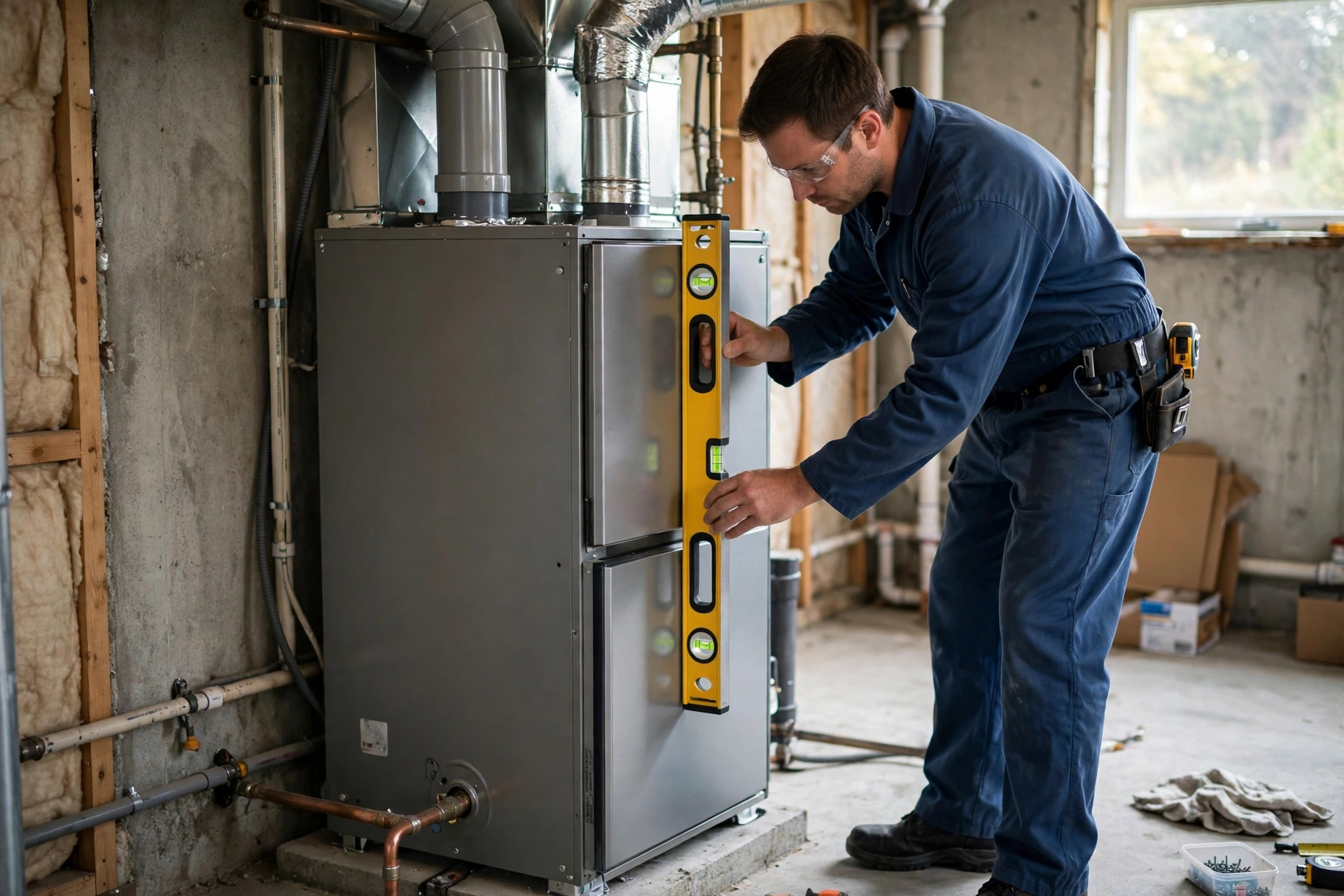
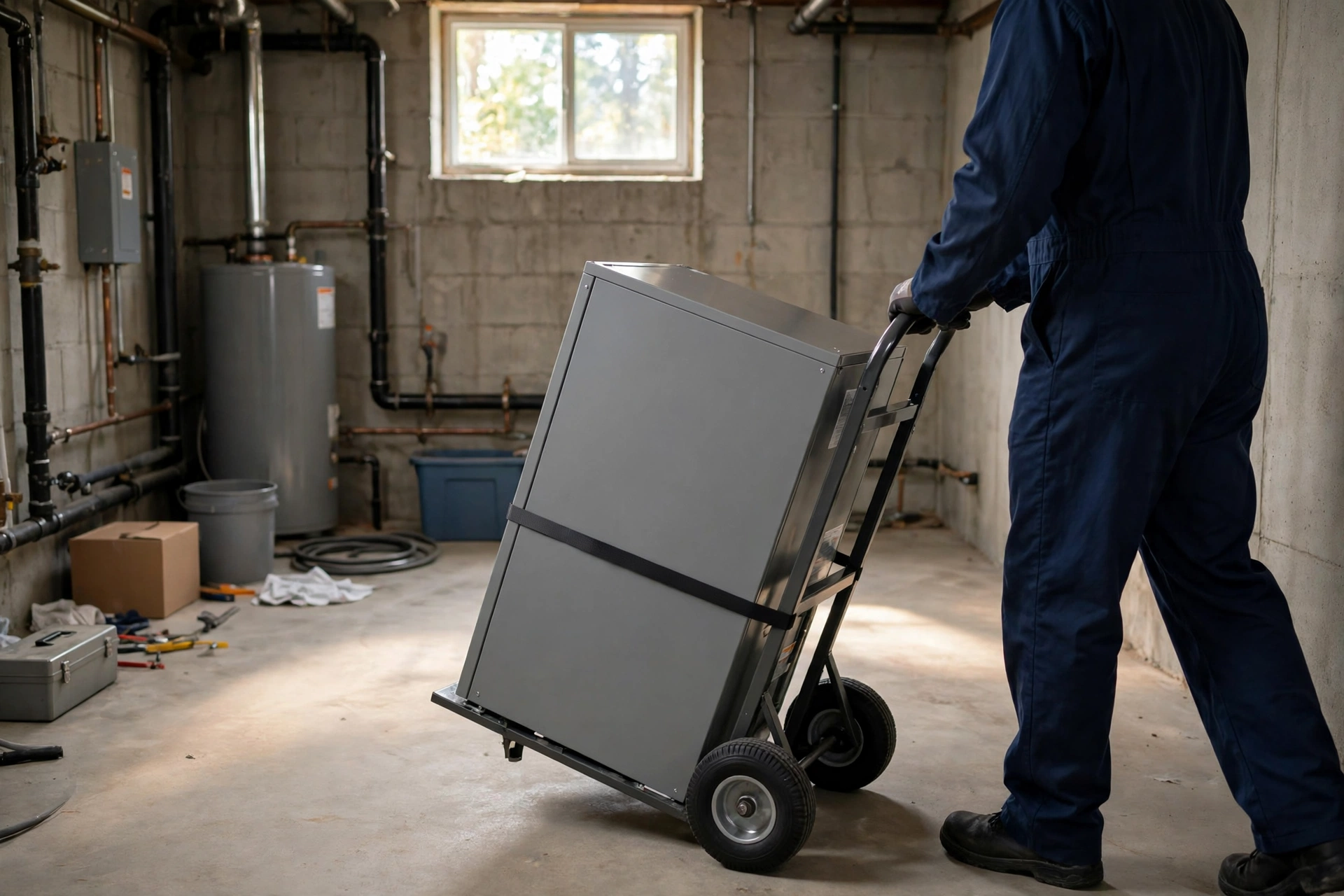
Installation day begins with protecting floors and work areas, shutting down the old system safely, and removing it without damaging surrounding finishes. The new furnace is set level, connected to the plenum and return, and sealed at the joints so heated air goes into the ducts rather than leaking into a closet, basement, or attic. Gas or electrical connections, venting, and the condensate trap and drain are completed and checked before the system is ever fired. Access and logistics are planned in advance, including door widths, stair turns, and where the new unit travels through the home. That preparation protects walls and floors and keeps the day moving. Manassas homes with tight utility closets benefit most from this forethought, because cabinet dimensions decide what will fit before equipment is ever ordered.
Startup is a testing process, not a formality. We run the furnace through several heating cycles, confirm the inducer motor and ignition sequence, set gas pressure or test electric stages as applicable, and measure temperature rise against the manufacturer range. The thermostat is configured and the filter fitted. Before leaving, we walk you through basic operation, filter access, and what normal sounds and cycles look and sound like in your Prince William County home. Thermostat compatibility is confirmed during planning rather than discovered during startup, especially where an older control cannot support newer blower features. If a control change makes sense, it is discussed openly as part of the project. The finished system should work as one unit, with the wall control and furnace properly matched from the first cycle onward.
Even a well chosen furnace underperforms when the air side is ignored. During installation we inspect accessible duct connections, look for crushed or disconnected runs, and check that the return path can supply the air the blower needs. A zone damper system, where fitted, is confirmed to open and close correctly. Static pressure concerns are discussed honestly, because correcting a major duct limitation matters as much as the new equipment itself for comfort. We also review condensate routing carefully on high efficiency installations, since a poorly sloped drain line invites winter shutdowns and water damage near the furnace. The trap is primed, the line is secured, and drainage is observed during testing. These unglamorous details decide whether a new installation stays trouble free through its first cold season in Northern Virginia.
Venting deserves the same care, particularly when an installation changes efficiency category. High efficiency furnaces produce condensate that must drain through a clear trap and line, and their vent pipes need correct slope and termination. Standard efficiency models rely on a sound flue. We verify the route suits the new unit and Manassas building layouts, from basement systems in older homes to compact closets in townhomes, so the furnace starts life set up correctly. After startup, we register the practical details for your records, including model information, filter size, and the maintenance rhythm the new equipment expects. You will know who to call and what to reference if questions arise later. A new furnace should begin its life organized, with its paperwork as tidy as its installation inside your home.
Most straightforward furnace installations are completed within a single working day, including removal of the old unit, setting the new one, and full startup testing. Jobs that need duct changes, a new vent route, or a fuel conversion take longer, and we explain that timing in advance so your household can plan around the work in Manassas. Permit and code considerations are part of responsible installation planning in Prince William County, and we discuss what applies to your project before work starts. Gas connections, venting, and electrical work all sit under rules written for safety.
The schedule also depends on choices made during selection. If the plenum needs rebuilding to fit a different cabinet size, or a condensate drain needs a new route, that work is built into the plan rather than rushed. Careful fitting and sealing on installation day pays back in quieter operation and better airflow for years. Staging the home for installation day is simple: clear a path to the furnace, secure pets, and decide who will be home for the walkthrough at the end. Those small preparations keep the day efficient. We handle the heavy work, the connections, and the testing, then explain the new system before anyone signs off on the job.
At the end of the visit, the system should be heating evenly, cycling normally, and explained clearly. We leave filter details, thermostat guidance, and maintenance recommendations in plain language. If anything feels off in the first days of use, call (703) 962-7410 and describe it while the details are fresh. If your old system still runs, consider installing before it fails completely, because a planned change avoids a cold house and a hurried equipment choice. Fall installations in Manassas are especially comfortable to schedule. The new furnace then meets its first winter tested and understood, instead of being installed during the busiest emergency week of the year.
Replacing both systems together makes sense when both are aging, because they share the blower and air handler side of your home comfort system. A matched pairing ensures airflow is set correctly for heating and cooling, and one installation visit handles the shared components once. It can also align warranties and system design in a way piecemeal changes rarely achieve for Manassas homeowners. Cooling compatibility deserves the same planning care when the furnace shares a blower with an air conditioner, as most local systems do. Coil condition and airflow settings affect both seasons.
It is not always necessary, though. If the cooling system is newer and working well, a furnace only installation can be the sensible path, provided the blower and coil arrangement are compatible. We check the existing setup, talk through the age and condition of each part, and give a straightforward view rather than assuming a full system change. Families sensitive to indoor air concerns can discuss filtration options while the system is open, since cabinet changes are the easiest moment to improve filter access or size. We keep that conversation practical and optional.
Either way, the decision should rest on equipment condition, comfort problems, and your plans for the home. A house you expect to keep through many Prince William County winters justifies a different conversation than a short term stay. We lay out the options and let the reasoning, not pressure, guide the choice. Sound levels after installation reflect both equipment choice and installation quality, including sealed joints and secure mounting. If quiet operation matters in your home, raise it during selection rather than after. We would rather fit the right blower and settings from the start than retrofit calm into a system chosen without that priority in mind.
Before a new furnace goes in, homeowners ask these.
Describe what your furnace is doing and we will point you to the right next step.
Call (703) 962-7410Sizing should reflect your home layout, insulation, windows, and ductwork, not just the old unit rating. A proper assessment considers heat loss on cold Northern Virginia days. Correct sizing avoids short cycling from oversized equipment and constant running from undersized equipment, both of which hurt comfort.
Often yes, if the ducts are sound and sized reasonably for the new blower. We inspect connections, the plenum, and accessible runs during planning. Where a duct limitation would hold the new system back, we explain it clearly so you can decide how to address it.
Natural gas is common across Manassas, propane serves many homes on the edges of Prince William County, and electric furnaces suit homes without gas service. The right choice depends on what your home already has, venting options, and your comfort and operating preferences.
Many newer furnaces run quieter thanks to improved blower designs, including variable speed options that start and stop gently. Proper sizing and sealed duct connections also reduce noise. We can talk through blower choices during selection if noise from the current system bothers your household.
Expect normal startup smells as new components warm for the first cycles, and take time to learn the thermostat schedule. Watch for even heating and normal cycling. Anything unusual, like repeated shutdowns or loud new sounds, is worth a call so it can be checked promptly.
No heat tonight? We find the failed part and get the heat back on, around the clock.
Ignition, burner, and gas control problems found by sequence testing and fixed.
Heat strips, sequencers, and air handler faults diagnosed and repaired.
A full seasonal tune-up that keeps heat steady and catches wear early.
Sizing first, equipment second. Call for an installation plan written for your house, not a guess.
Call (703) 962-7410