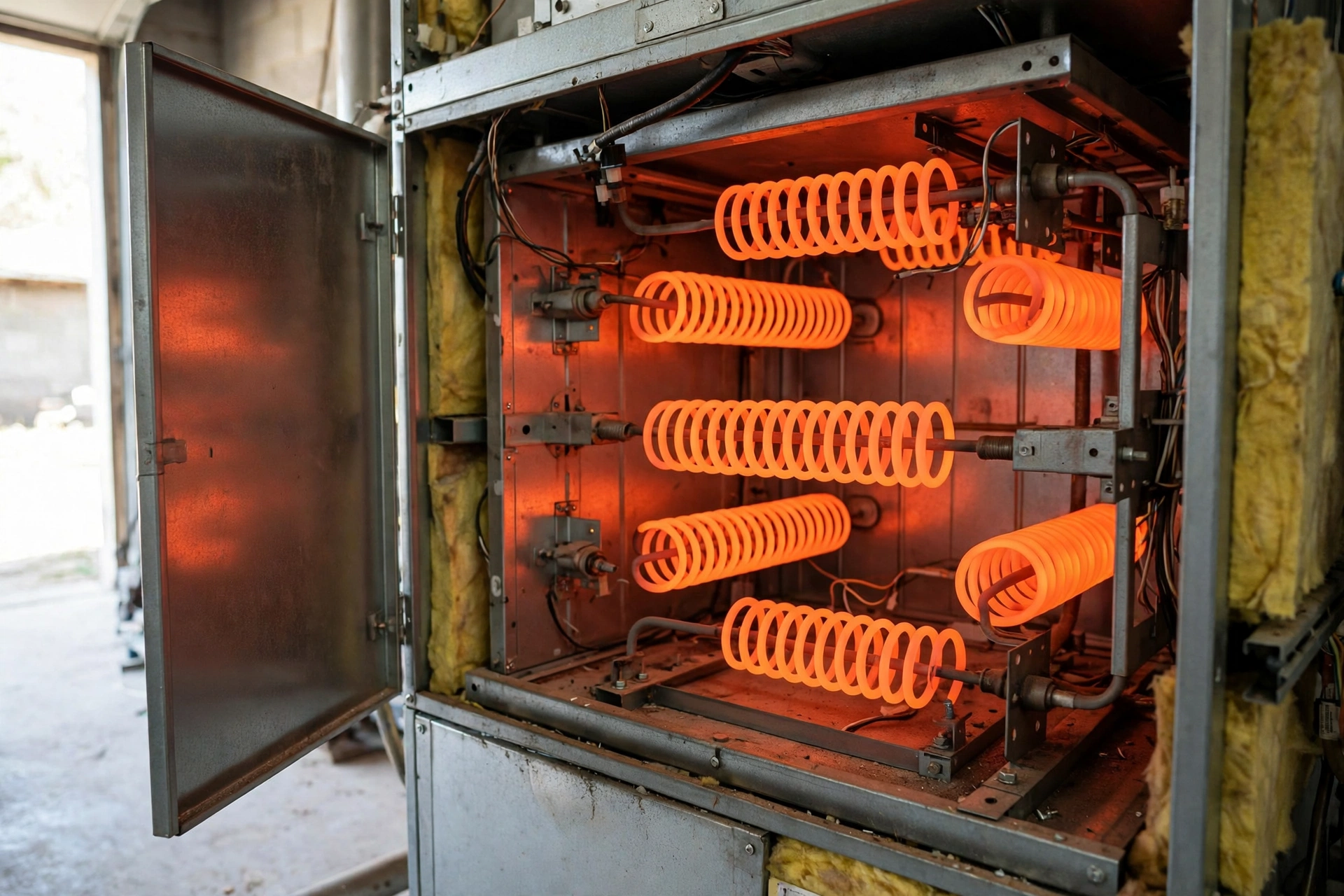
Electric furnaces and air handlers lose heat through failed heat strips, sequencers, and blower faults. We meter every stage and restore full output.
If your electric furnace blows cool air, runs constantly, or trips breakers, Manassas Furnace Pros can help. We test heat strips, sequencers, limit switches, and blower components in electric furnaces and air handlers across Manassas and Prince William County, explain the fault clearly, and repair the failed part so warm air returns. To book electric furnace repair for your home, call (703) 962-7410 and talk with our local team today.
Electric furnaces heat air with sets of heat strips, also called elements, that glow as air passes over them inside the air handler. A sequencer brings those strips on in stages, which prevents a sudden heavy electrical load and keeps temperatures steady. When a strip burns out or a sequencer fails, the blower may still run while the air stays lukewarm, and rooms in your Manassas home never reach the thermostat setting no matter how long the system runs. Electric furnaces are common in Manassas condos, townhomes, and homes built without gas service, and their faults tend to develop quietly. Because there is no burner noise to change, the first clue is often a power bill that climbs or a room that never quite arrives.
Diagnosing electric heat means testing each stage separately. We check element continuity, sequencer timing, wiring connections, and the limit switch that protects the cabinet from overheating. Sometimes only one stage has failed, which explains why the home heats slowly on mild days but falls behind during a Northern Virginia cold snap. Repairing the failed stage and confirming the remaining stages work restores full heating capacity without replacing parts that are still sound. Heat strips age at different rates depending on how often each stage runs, so a system can test well on a mild day and still lack capacity for a hard freeze. We stage the elements on one at a time and watch temperature rise build, confirming the full set supports the coldest nights Northern Virginia delivers each winter season.
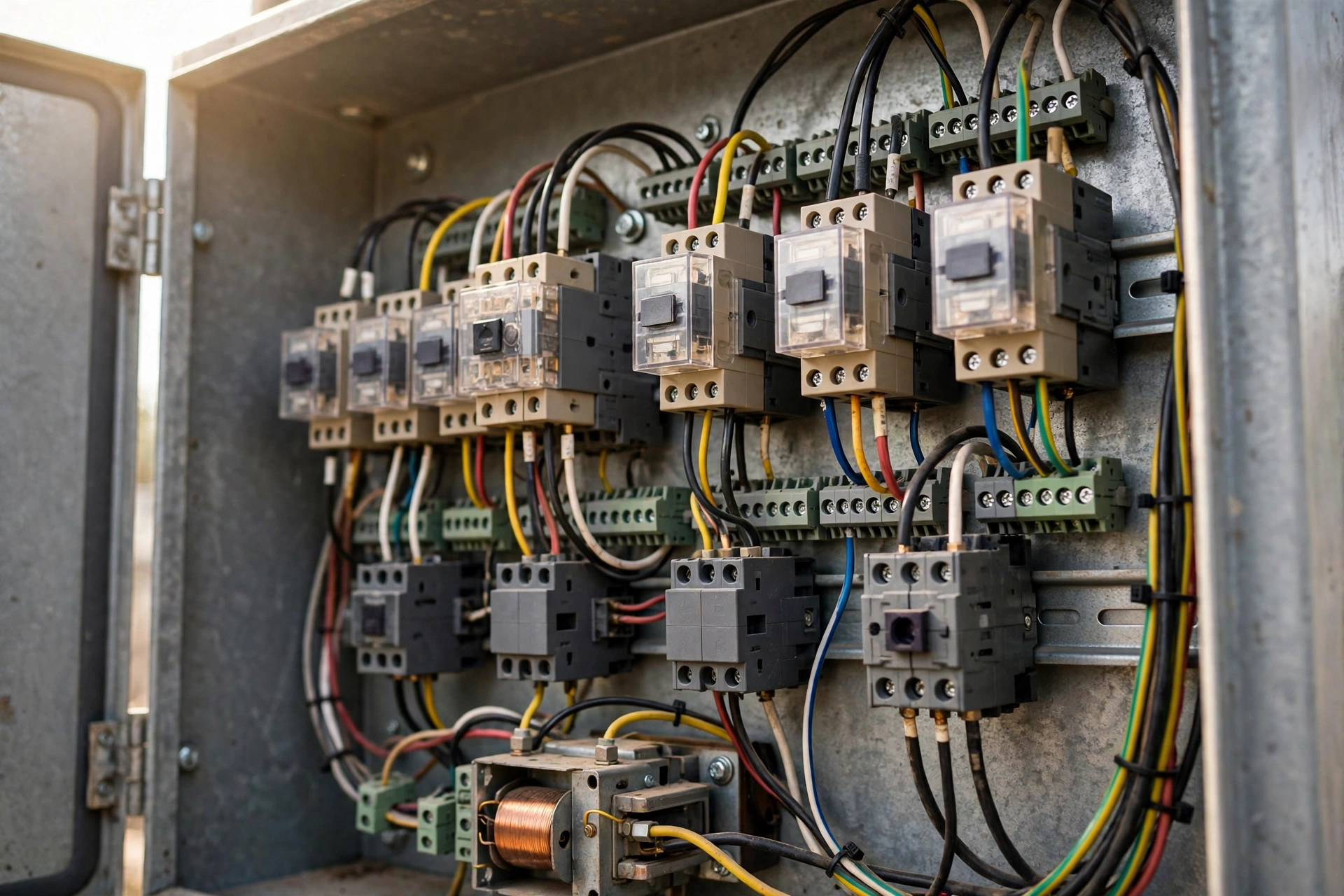
The blower in an electric furnace does double duty, moving heated air in winter and often supporting cooling in summer, so wear shows up in both seasons. A weakening run capacitor can leave the blower humming without starting, while a worn motor or dirty blower wheel reduces airflow across the heat strips. Low airflow makes the cabinet run hotter, cycles the limit switch, and leaves distant rooms in Prince William County homes noticeably cooler than rooms near the air handler. Connections inside electric air handlers endure heavy current and heat, which makes terminal condition a regular finding during repairs. Discolored insulation, loose lugs, or a wire that has grown brittle near a strip can interrupt a whole stage. Correcting those details safely is as important as replacing the failed element itself in many homes.
We measure airflow, inspect the blower wheel for buildup, and test the capacitor and motor under load. Filter condition and return air restrictions are part of the same check, because even a healthy blower cannot move air through a clogged filter. When the repair is complete, we confirm that air at the registers feels properly warm and that the system cycles off at the set temperature instead of running endlessly and driving up your electric use. Blower speed settings influence how electric heat feels, because air moving too slowly lets the cabinet run hot while air moving too fast feels drafty at the registers. We confirm the speed tap suits the strip configuration, a detail sometimes missed after past repairs, and adjust only within the manufacturer range for the equipment installed.
An electric furnace that trips its breaker is asking for attention, not repeated resets. A shorted heat strip, a failing blower motor drawing too much current, or a loose connection heating up at a terminal can all trip protection. Each reset without a diagnosis adds stress to wiring and components. We isolate the circuit involved, test the components on it, and repair the fault so the system can run a full heating cycle safely. Homes running electric heat through Prince William County winters feel operating cost directly, so a furnace wasting energy through a stuck sequencer or shorted element deserves prompt correction. A strip that stays energized without a call for heat warms nobody and only spins the meter. Testing catches that hidden fault during an ordinary repair visit.
Manassas homes with electric heat range from older houses with dedicated furnace closets to townhomes and condos with compact air handlers. Panel capacity, wire condition, and past repair work all vary, so we document what we find and explain it in plain terms. If a problem sits beyond the furnace itself, we say so clearly and help you understand the next step. The goal is a furnace that heats reliably through winter without nuisance trips or lukewarm air. We finish by documenting which stages were tested, which parts were replaced, and how the system performed across a full cycle with the thermostat satisfied at the end. That record helps future visits start ahead of the problem, and it gives you a clear account of the electrical health of your heating system for the seasons ahead.
Cool air from an electric furnace usually means the blower is running but the heat strips are not energizing. A failed sequencer is a frequent cause, because it controls when each strip turns on. If the sequencer sticks or fails open, the fan delivers unheated air even though the thermostat is calling for heat and the system sounds normal. A sequencer that chatters or clicks repeatedly before heat arrives is often nearing failure, even if the strips eventually energize. Mentioning that sound when you book helps, because intermittent sequencer faults can hide during a short test unless the system is run through several complete calls for heat in a row.
Burned out elements produce a similar result, especially when only some stages work. The air may feel slightly warm on a mild day and clearly cold during a Manassas cold snap, when full capacity is needed. A tripped limit switch or a failed control can also interrupt the strips while the blower continues. Auxiliary heat behavior matters in homes pairing electric strips with other equipment, where staging mistakes make the expensive heat source do work it should only support. We confirm the thermostat and control settings stage the strips sensibly, so comfort does not come with wasteful, unnecessary electric heating hours.
Check that the thermostat is set to heat and the filter is clean, then avoid running the system for hours hoping it will catch up. That only circulates cool air and raises energy use. Call (703) 962-7410 and describe the air temperature at the vents, which helps narrow the fault quickly. If one room on electric heat feels fine and another stays cold, the strips are rarely the explanation, since they serve the whole air handler at once. That pattern points toward ducts or airflow instead. We say so plainly during the visit rather than selling element work that cannot change a delivery problem.
Constant running often means the furnace cannot produce enough heat to satisfy the thermostat. One or more failed heat strips reduce capacity, so the remaining stages work continuously without reaching the setting. The home may stay a few degrees below target all day, which is a classic sign of a partial heating failure in electric systems. Breakers that trip only during the coldest weather suggest a load that appears when every stage runs together, such as a strip drawing excess current at full demand. Testing stage by stage isolates it. Avoid running the furnace on a breaker that trips repeatedly until that cause is found and repaired properly.
Airflow and insulation play a role too. Leaky ducts, a dirty filter, or poorly sealed windows in older Manassas homes let heated air escape faster than the furnace can replace it. A thermostat placed near a draft or heat source can also misread the room and call for heat at the wrong times, adding to the long run times. Warm air should arrive within a reasonable time after a call for heat and stay consistent through the cycle, not swing between hot and cool. Swings suggest staging or airflow trouble worth correcting.
Testing separates a capacity problem from a heat loss problem. We verify each strip and sequencer stage, check airflow, and look for obvious duct losses. Once the cause is clear, the repair plan is straightforward, and your Prince William County home can hold temperature without the furnace running from morning to night. Keep returns and supplies open in every room with electric heat, since closed vents raise cabinet temperatures and stress limit controls. Balanced airflow protects the strips and the blower together. It also helps the system reach the thermostat setting and shut off, which is when real operating savings happen each day.
What to know when electric heat fades or quits entirely.
Describe what your furnace is doing and we will point you to the right next step.
Call (703) 962-7410A sequencer is a control that turns electric heat strips on in stages instead of all at once, which manages electrical load and temperature. When it fails, some or all strips stay off and the furnace blows cool air. Testing confirms whether the sequencer or an element is at fault.
Yes, because electric furnaces rely on combined stages to reach full capacity. Losing one strip may only show on the coldest days, when the remaining stages cannot keep up. The system runs longer, rooms cool unevenly, and the fault often gets mistaken for a thermostat problem.
A tripping breaker can point to a shorted heat strip, a blower motor drawing excess current, or a loose electrical connection. Repeatedly resetting the breaker is not a fix and can cause further damage.
An electric furnace makes all of its heat with resistance strips inside the air handler, while a heat pump moves heat from outdoor air and uses strips only as backup. The repair approach differs, so knowing which system you have helps the visit start with the right tests.
Confirm the thermostat is set to heat, check the filter, and make sure vents are open. If the air stays cool after a full cycle, a strip, sequencer, or control fault is likely.
No heat tonight? We find the failed part and get the heat back on, around the clock.
Ignition, burner, and gas control problems found by sequence testing and fixed.
A full seasonal tune-up that keeps heat steady and catches wear early.
New furnaces sized to the house and installed with sealed, tested duct connections.
If the air feels lukewarm or the blower will not start, we will meter the stages and find the break.
Call (703) 962-7410