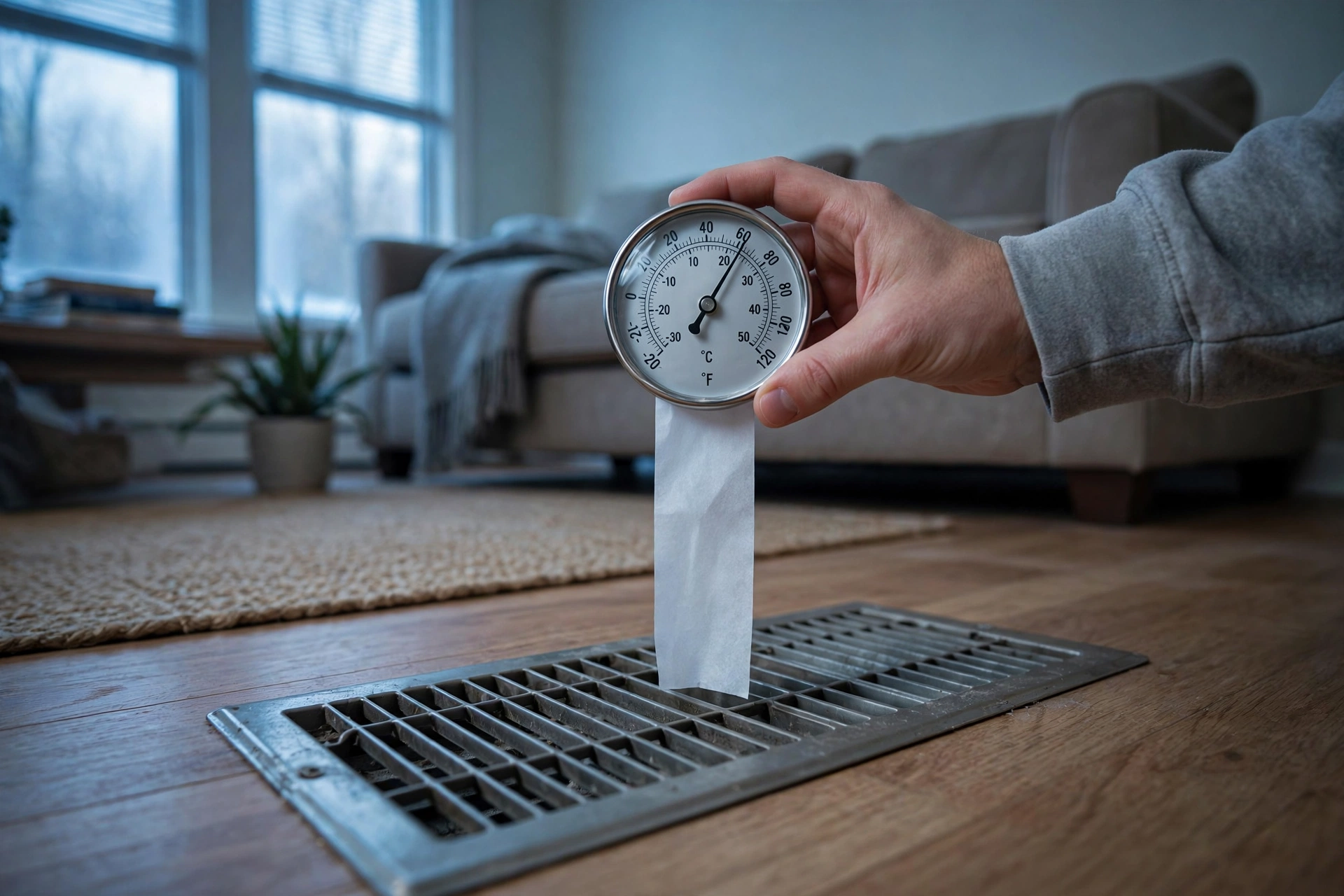
The blower pushes air, the vents respond, but the warmth never arrives. Cold air has a short list of causes in a Manassas home, and each one leaves a different fingerprint on the heating cycle.
A furnace blowing cold air in Manassas usually means the blower is moving air the burners never heated, or heated air is losing its warmth on the way to the vents. The common culprits are a thermostat fan set to on, a dirty flame sensor, a failed igniter, or duct leaks in a cold attic. Set the fan to auto, check the filter, and if the air stays cold through a full cycle, call (703) 962-7410 for a diagnosis.
Start with the simplest explanation. If the thermostat fan is set to on instead of auto, the blower runs around the clock, including the long stretches between heating cycles when no burners are lit. The air it pushes then is ordinary room air traveling through cold ductwork, and it feels chilly on skin even though the furnace itself works perfectly. The fix takes five seconds at the thermostat, and it is the first thing worth ruling out before assuming a part has failed inside the cabinet.
When the fan setting is right and the air still runs cold, the burners become the prime suspects. A dirty flame sensor lets the burners light for a few seconds and then shuts them down before the heat exchanger warms up, so the blower delivers air that never had a chance to absorb heat. A cracked hot surface igniter produces a colder pattern still: the burners never light at all, the safety controls end the attempt, and the blower finishes its programmed run pushing unheated air through the house.
Sometimes the furnace makes proper heat and the house still receives cold air. Leaky or partly disconnected duct runs in an unconditioned attic or crawl space bleed warmth into the cold along the way, and air that finally reaches a far bedroom vent can arrive barely above room temperature. Weak airflow from a clogged filter or a tiring blower stretches the problem further, because slow moving air spends more time surrendering heat along the run. Comparing vent temperatures room by room separates a furnace heating failure from an air delivery failure quickly.
Three quick checks are safe for any homeowner, take minutes, and tell you a great deal about which family of causes you are dealing with before anyone opens a cabinet.
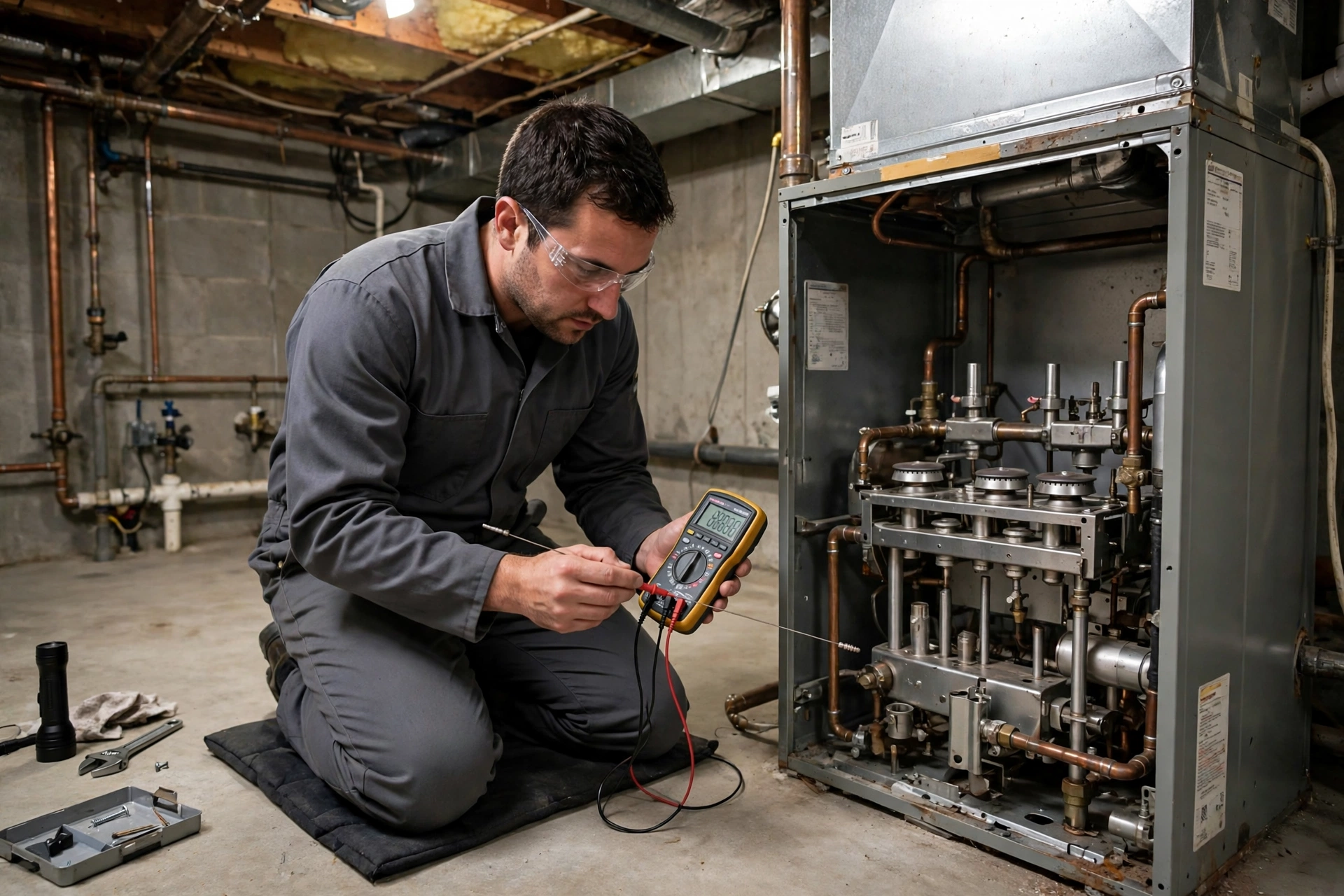
Stop at the cabinet door. Igniters, flame sensors, gas valves, and control boards are technician territory, because testing them means working around gas lines and line voltage. If you smell gas at any point during these checks, leave the house and call your gas provider or emergency services from outside, then call us once the scene is confirmed safe.
Cold air becomes an emergency when the house has no working heat source at all during a hard freeze. Indoor temperatures in Manassas can fall into the forties overnight in January, which risks burst pipes in exterior walls and real hardship for children and older relatives. If the furnace cannot make heat and the forecast is dropping, treat it as a no heat call and reach us any time at (703) 962-7410.
Our visit starts by watching one complete heating cycle with meters ready. We note whether the burners light, how long they stay lit, and what the flame sensor signal reads while they run. A sensor signal that fades explains burners that quit early. Burners that never light send us to the igniter and the gas valve. Burners that run a full cycle while the vents stay cold send us out along the ductwork with a thermometer instead.
The repair follows the finding. Combustion faults are handled on our gas furnace repair visits for gas systems, or through electric furnace repair when failed heat strips leave an electric unit blowing unheated air. Warmth lost on the way to the rooms is a delivery problem, handled as ductwork repair: sealing leaks, reconnecting runs, and restoring airflow so heat survives the trip.
Before the visit ends, the furnace runs full cycles and we check the registers again, room by room, against the readings from the start of the visit. You get the cause in plain language, the part or duct section involved, and what to watch for through the rest of the season. If the pattern returns, that history tells the next visit exactly where to begin.
What Manassas homeowners ask when the vents will not warm up.
Describe what your furnace is doing and we will point you to the right next step.
Call (703) 962-7410Morning is when the furnace works hardest after an overnight setback, and cold ducts from a night of still air deliver a chilly first blast. If the air warms within a cycle or two, the system is likely healthy. Air that stays cold through repeated morning cycles points to ignition or flame sensing instead.
Much of a heating cycle sounds the same whether or not the burners are lit: the inducer runs, relays click, and the blower moves air on schedule. A furnace can sound completely ordinary while locked out on ignition, which is why watching burner behavior and vent temperature together tells the real story.
Yes. Supply air leaves the furnace hot, but a leaking or uninsulated run through a cold attic or crawl space can surrender much of that heat before the air arrives. The far rooms suffer most, which is why one cold bedroom with warm vents elsewhere is a classic duct pattern rather than a furnace failure.
Most furnaces delay the blower briefly so the heat exchanger warms first, so the first minute of air can feel neutral. By a few minutes into the cycle the air at a supply vent should feel clearly warm. Air that is still cool after five minutes of burner run time deserves a diagnosis.
No. A fan set to on, a single disconnected duct run, or a heat strip failure in one stage of an electric furnace can all deliver cold air while the rest of the system works. That is exactly why the pattern across rooms and across the cycle matters more than any single vent reading.
Burners that light and quit within minutes often feel like cold air at the vents.
When the cold air gives way to total silence, the fault has moved to the startup chain.
Ignition, burner, and flame sensing faults found by sequence testing and repaired.
No heat at all on a freezing night gets routed first, around the clock.
Warm vents are the entire point of the system. Call and describe the pattern; the diagnosis starts on the phone.
Call (703) 962-7410