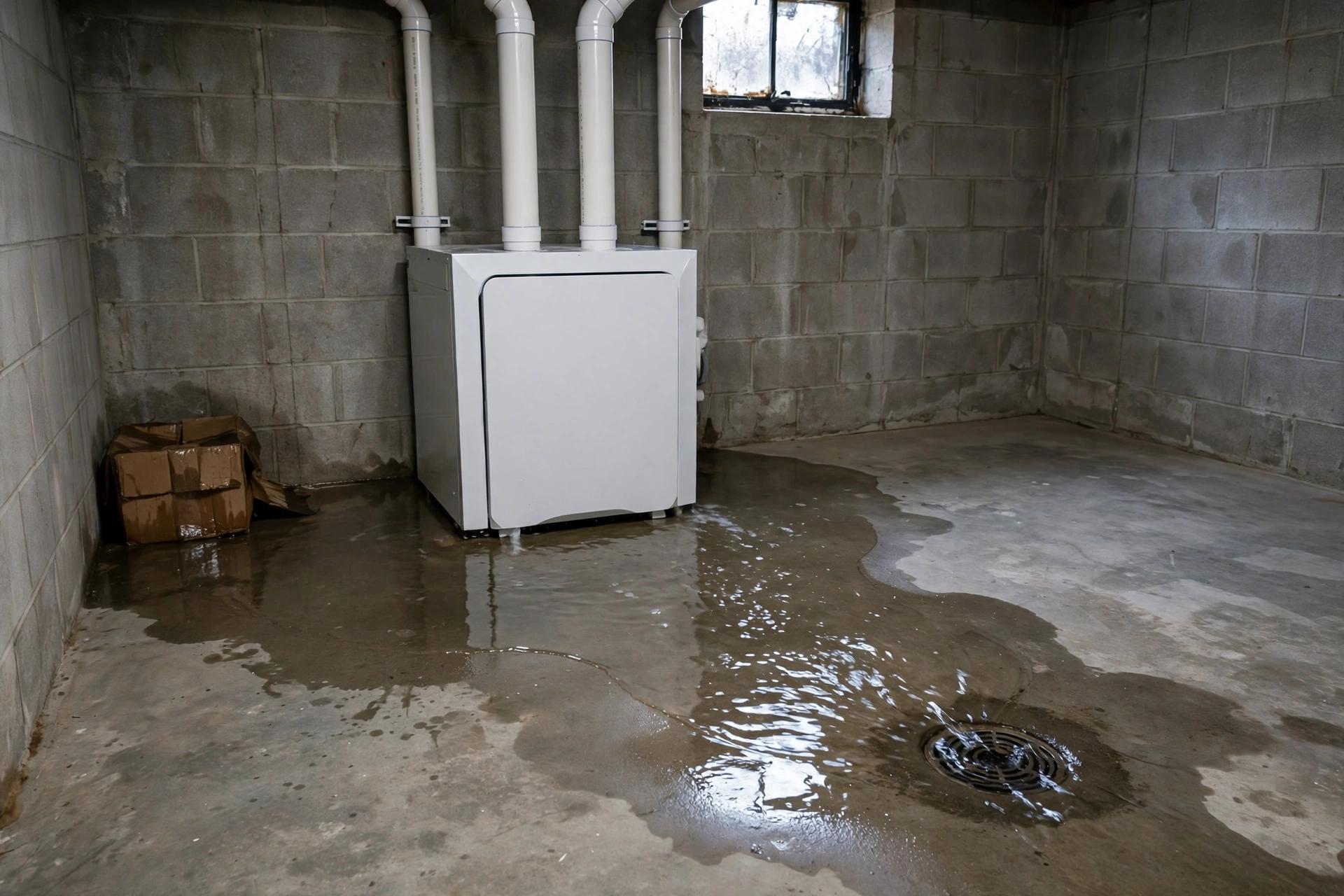
A puddle under the furnace surprises homeowners, because furnaces make heat, not water. Except modern high efficiency furnaces do make water, every single cycle, and that water has to drain somewhere.
A furnace leaking water in Manassas almost always involves the condensate system of a high efficiency model: a clogged drain line, a cracked condensate trap, or a small pump that has stopped moving water. In summer, the same puddle can come from the air conditioning coil that shares the drain. Dry what you can, check the pump and the drain path, and call (703) 962-7410 before the water reaches stored belongings or the blower compartment.
High efficiency furnaces squeeze so much heat from their exhaust that the water vapor in the flue gases condenses inside the system, the same way breath fogs a cold window. That condensate, a steady trickle across a long heating day, collects in a trap at the base of the furnace and drains away through a plastic line, often helped by a small condensate pump that lifts the water to a drain. The system is simple and reliable, right up until any link in that short chain fails.
The failures are humble ones. The trap and drain line slowly coat with sediment and growth until the trickle has nowhere to go and backs up into the cabinet, spilling at the base. A trap can crack, especially after freezing in an unheated space, and drip a little more with every cycle. The condensate pump can fail outright, lose its float, or simply lose power, filling its reservoir until water finds the floor. Loose or disconnected drain hoses after other work round out the usual list.
Not every puddle at the furnace is the furnace's fault. In cooling season, the air conditioner evaporator coil above the furnace produces far more condensate, and it often shares the same drain path, so a clog shows up in July wearing the furnace's name. A whole house humidifier mounted on the ductwork can leak at its water line or pad housing. Even a nearby water heater can send water traveling across a sloped floor to pool at the furnace, which is why the wettest point and the drip pattern matter.
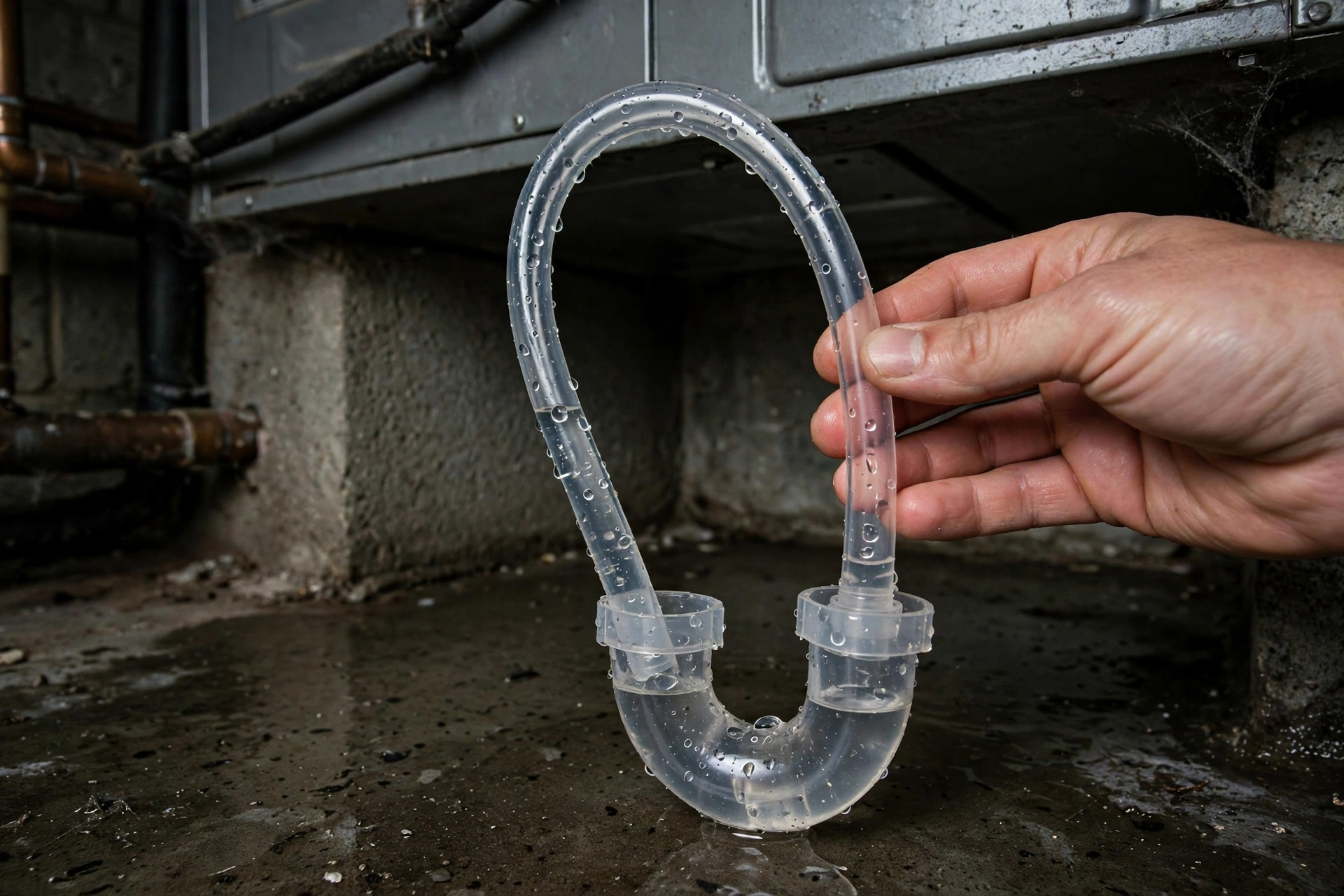
Water problems reward dry observation. These checks are safe, need no tools beyond a towel, and usually identify which system the water belongs to.
Respect the meeting of water and electricity. Keep hands and towels out of standing water near the cabinet, and if water is reaching the blower compartment or any wiring, switch the furnace off at its service switch and call. Do not pour bleach or drain chemicals into condensate lines; the traps and pumps are plastic, the clogs are soft, and the fix is mechanical, not chemical.
Water becomes urgent when it stops the heat: many high efficiency furnaces shut down when condensate backs up against a float switch, which turns a puddle into a no heat call on the coldest night of the month. It is also urgent when water spreads toward finished flooring, stored belongings, or the furnace electrical compartment. Call (703) 962-7410 and describe both the water and whether the heat still runs.
We start by drying the area and running the furnace, watching the condensate path under real conditions. The trap comes out and gets cleaned or replaced if it is cracked. The drain line is cleared end to end and re-sloped where it sags. The pump is tested under load, its float exercised, and its discharge line confirmed clear. Each link gets proven in order, because fixing one clog while a pump dies quietly is how puddles return next week.
Drain care is not a separate trade; it is part of keeping a high efficiency furnace healthy, which is why condensate cleaning sits inside every furnace maintenance visit we run. And when backed up water has already shut the furnace down on a cold night, the call is handled as emergency furnace repair, with the drain fault and the no heat problem solved in the same visit.
Before we leave, the furnace runs long enough to produce condensate on purpose, and we watch it travel the full path to the drain or pump discharge. You will know which link failed, see the part involved, and learn the one seasonal glance, a look at the trap and pump each fall, that catches the next clog while it is still a five minute matter.
Puddle questions from owners of high efficiency furnaces.
Describe what your furnace is doing and we will point you to the right next step.
Call (703) 962-7410Condensate is produced only while the burners fire and exhaust gases cool inside the high efficiency system. Between cycles there is nothing new to drain, so a running only leak fits a condensate path problem perfectly: the water is made, the path is blocked or broken, and the overflow happens exactly when production peaks.
Yes, and in summer it is the more likely source. The evaporator coil sits above the furnace and generates heavy condensate while cooling, usually draining through the same trap and line. A shared clog therefore floods in July and gets blamed on the furnace below. The season and which system was running separate the two quickly.
The pump reservoir fills cycle by cycle until water spills over the top or a safety float stops the furnace entirely. Some pumps fail silently for days in an unfinished basement, which is why the puddle is often large by discovery. A pump that hums without moving water, or sits silent with a full reservoir, has told you its story.
Easily. A hairline crack in the trap may only weep while condensate is flowing, a small amount each cycle that evaporates between runs in a warm utility room. The leak announces itself through a musty smell, a stain line on the concrete, or rust creeping at the furnace base long before a real puddle forms.
A modest drain leak with the water staying clear of the cabinet electrics can usually wait a short time for a scheduled visit, with towels down and a check every few hours. Water reaching the blower compartment, wiring, or a finished floor changes the answer: switch the system off and call the same day.
Gurgling and bubbling at startup often belong to the same condensate story.
A float switch interrupting cycles can look like short cycling from the couch.
Condensate traps and drains cleaned and checked on every seasonal tune-up.
When the backed up water shuts the heat off, it routes as an emergency.
Water at the furnace base never fixes itself. Call and tell us when the puddle appears.
Call (703) 962-7410