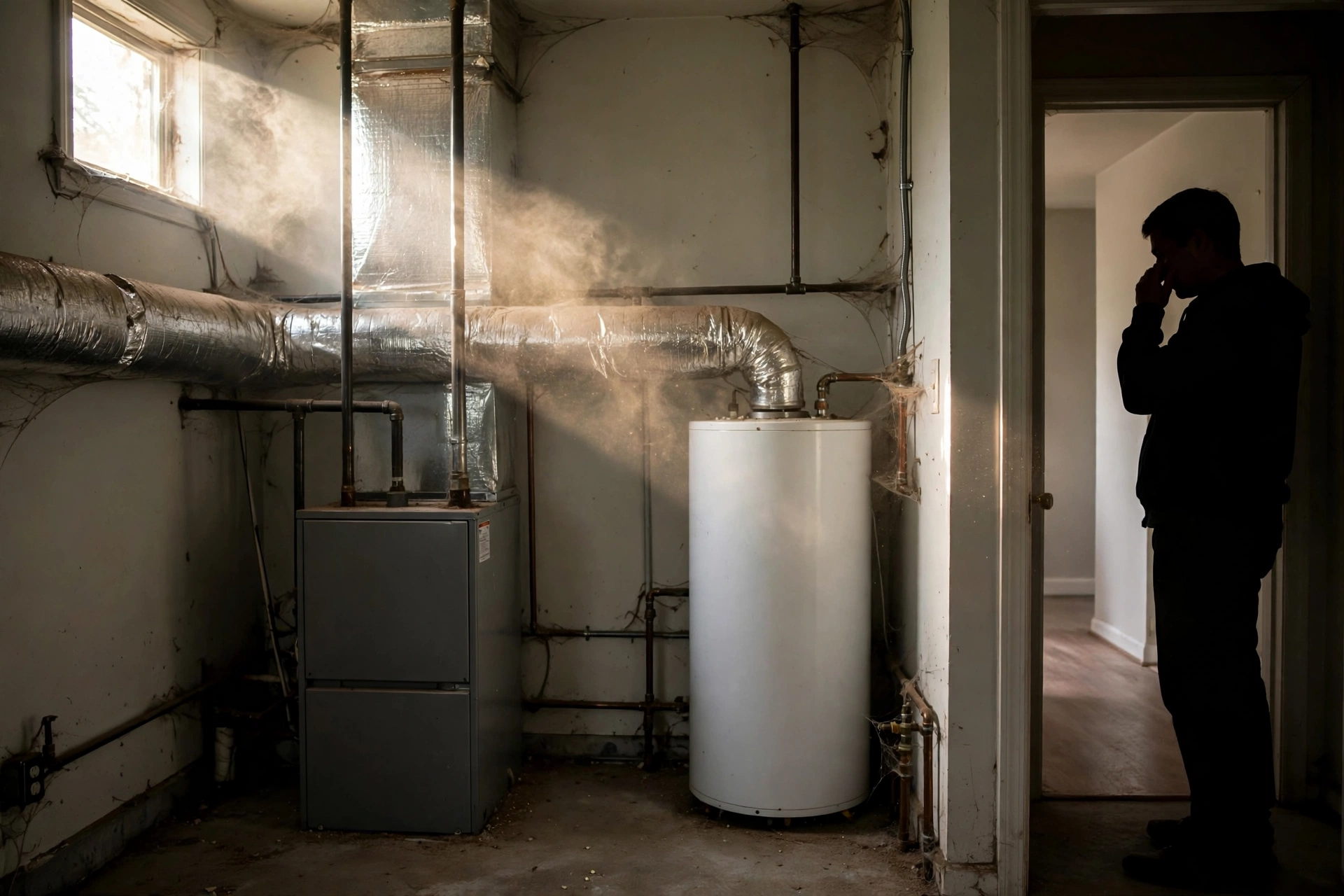
A burning smell from the vents sits on a scale. At one end is the harmless dust of the first fall startup. At the other are overheated wires and a blower motor in trouble. Knowing which end you are on matters.
A furnace that smells like burning in Manassas is most often cooking off settled dust during the first heating cycles of the season, a smell that fades within an hour or two of running. Smells that persist, return with every cycle, or carry a sharp electrical or plastic edge point to overheating components, a struggling blower motor, or debris where it does not belong. A strong smell, visible smoke, or any odor of gas means switch off and call (703) 962-7410.
The innocent explanation is dust. All summer, fine dust settles on the heat exchanger, the elements of an electric furnace, and the inside of the ductwork near the unit. The first real heating cycles of fall cook that dust off, and the vents carry a dusty, scorched smell through the house. It is unmistakable once you know it, and it has a defining trait: it weakens with every cycle and is gone within a few hours of total run time. Dust is the only burning smell that improves with use.
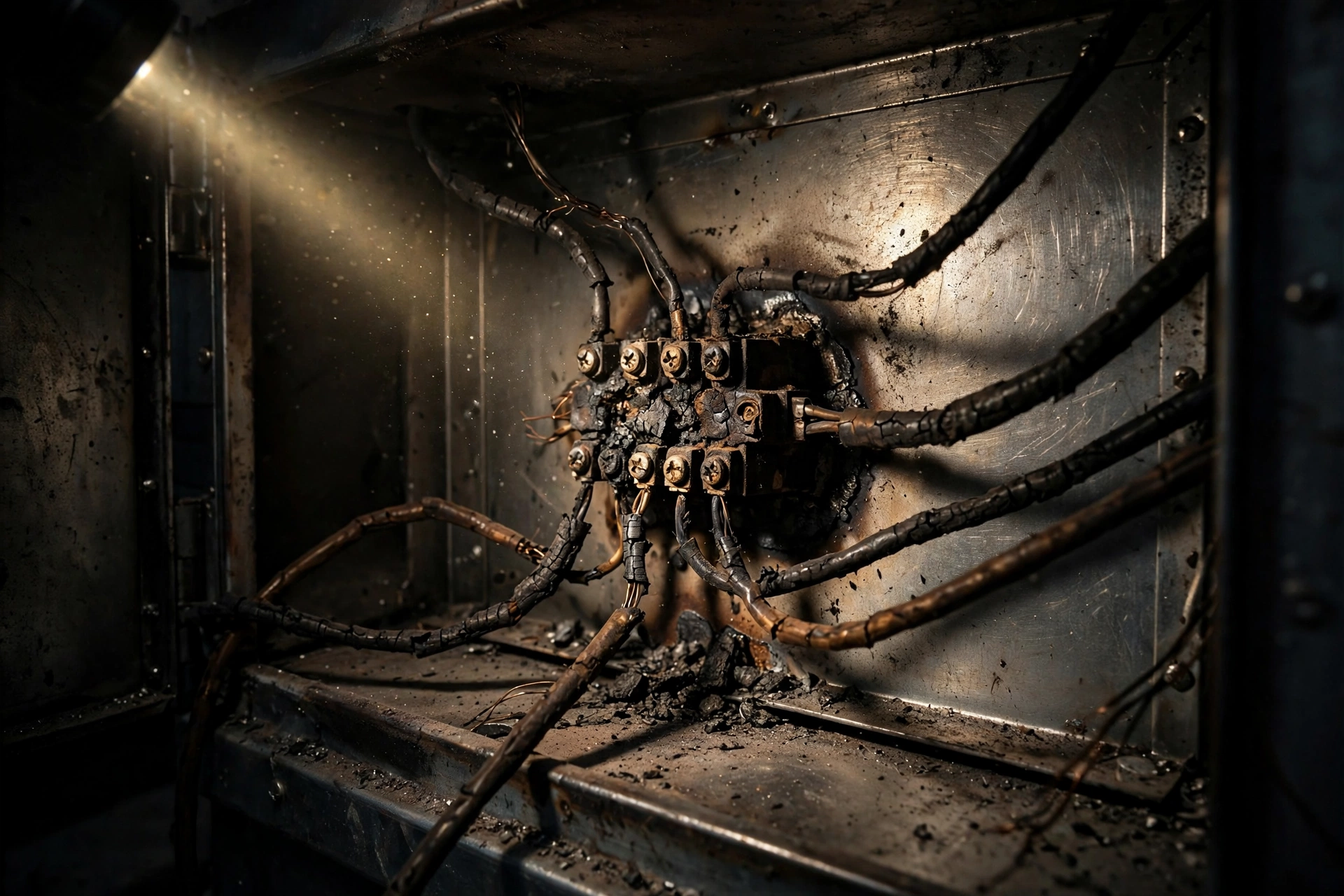
Electrical sources produce a sharper smell, often described as hot plastic or a chemical tang, and they do not fade. A blower motor running hot as its bearings fail can perfume the whole house through the ducts. Wire insulation scorched at a loose terminal, a capacitor swelling toward failure, or a hot spot on the control board all announce themselves this way. Because the blower distributes air from the cabinet to every room, even a small electrical fault inside the furnace becomes a whole house smell quickly.
The third family is mechanical and foreign. A slipping belt on an older drive can smell like burning rubber at startup. Items stored against the cabinet or fallen into a floor register can scorch when the heat runs. And one thing a burning smell is not: a carbon monoxide warning. Carbon monoxide has no odor at all, which is why detectors, not noses, guard against it, and why a cracked heat exchanger can be dangerous in a house that smells perfectly normal.
Your nose and the calendar do most of the safe diagnostic work here. A few observations separate the dusty first run from a smell that should stop the system.
Strong smells end the investigation. If the smell is intense, smoky, or makes eyes water, turn the thermostat down and switch the furnace off, then call for service. A smell of gas is a different protocol entirely: leave the house, avoid switches, and call your gas provider or emergency services from outside. A sounding carbon monoxide detector means the same: outside first, emergency services, then us.
Treat these as emergencies every time: a burning smell with visible smoke, any smell of gas, a carbon monoxide alarm, or a smell strong enough to sting your eyes. Leave the house for gas or carbon monoxide alarms, call emergency services from outside, and then reach us at (703) 962-7410. No heating problem is worth guessing against those signals, and no technician will ever fault you for treating them seriously.
Inspection starts with the system off and the cabinet open, looking for the physical evidence smells leave behind: heat darkened wire insulation, a discolored terminal block, a blower motor too hot to keep a hand near, dust patterns that show where air has been bypassing the filter. We measure the blower motor current draw against its rating, because a motor pulling excess current is a motor generating the heat behind the smell, whether or not the damage shows yet.
When the evidence points at the heat exchanger or combustion side, the visit becomes a heat exchanger repair inspection, with the exchanger examined and the findings shown to you directly. When the smell has arrived with no heat at all, the call routes as emergency furnace repair, because a furnace that smells wrong and does not run gets the urgency of both problems at once.
After the repair, the furnace runs through full cycles while we confirm the smell is gone at the cabinet and at the farthest vent. You will know exactly what was overheating, what was done about it, and whether the cause was a one time event, like debris, or a wearing part whose condition belongs on your watch list for coming seasons.
Safety questions deserve direct answers, starting with these.
Describe what your furnace is doing and we will point you to the right next step.
Call (703) 962-7410The dusty smell of a first run should weaken noticeably within the first hour or two of total heating and be gone the same day. If it holds its strength into the next day, returns at full force with every cycle, or smells electrical rather than dusty, it has left the normal pattern and deserves an inspection.
Sharp, chemical, plastic like smells usually trace to overheated electrical parts: blower motor windings running hot, a failing capacitor, or wire insulation scorching at a loose connection. These faults distribute their smell through every vent, tend to recur each cycle, and can progress to a shutdown or worse if the part keeps cooking.
Dust burns off once and is gone, so a smell that returns at full strength each cycle has a renewable source: a motor that heats up every run, debris sitting on a hot surface, or a belt that slips at every startup. The returning pattern is the detail that rules out housekeeping and points at a component.
Yes. Turn the thermostat down first, then use the furnace service switch to cut power, and leave the system off until it is checked. A strong burning smell means something is hotter than it should be, and removing power stops the heating while you arrange the visit. Keep the area around the unit clear while you wait.
More often than homeowners expect. Cardboard, paint supplies, laundry, and plastic bins stored against a hot cabinet can scorch slowly, and small items that fall into floor registers sit directly in the hot airstream. Before assuming the worst, look at what the utility room has accumulated since last winter, then judge the smell again.
When the smell is followed by silence, start with the no start checkpoints.
A smell with a squeal or scrape usually shares one failing part.
Cracked exchanger detection, safe shutdowns, and full replacement.
Smoke, gas odors, and alarms route first, around the clock.
Your nose found something your eyes cannot see yet. Call and describe the smell and its timing.
Call (703) 962-7410